TL;DR
- Most of
what to eat during pregnancy is ordinary food: protein, produce, whole grains, dairy or a fortified alternative, and low-mercury fish two or three times a week.
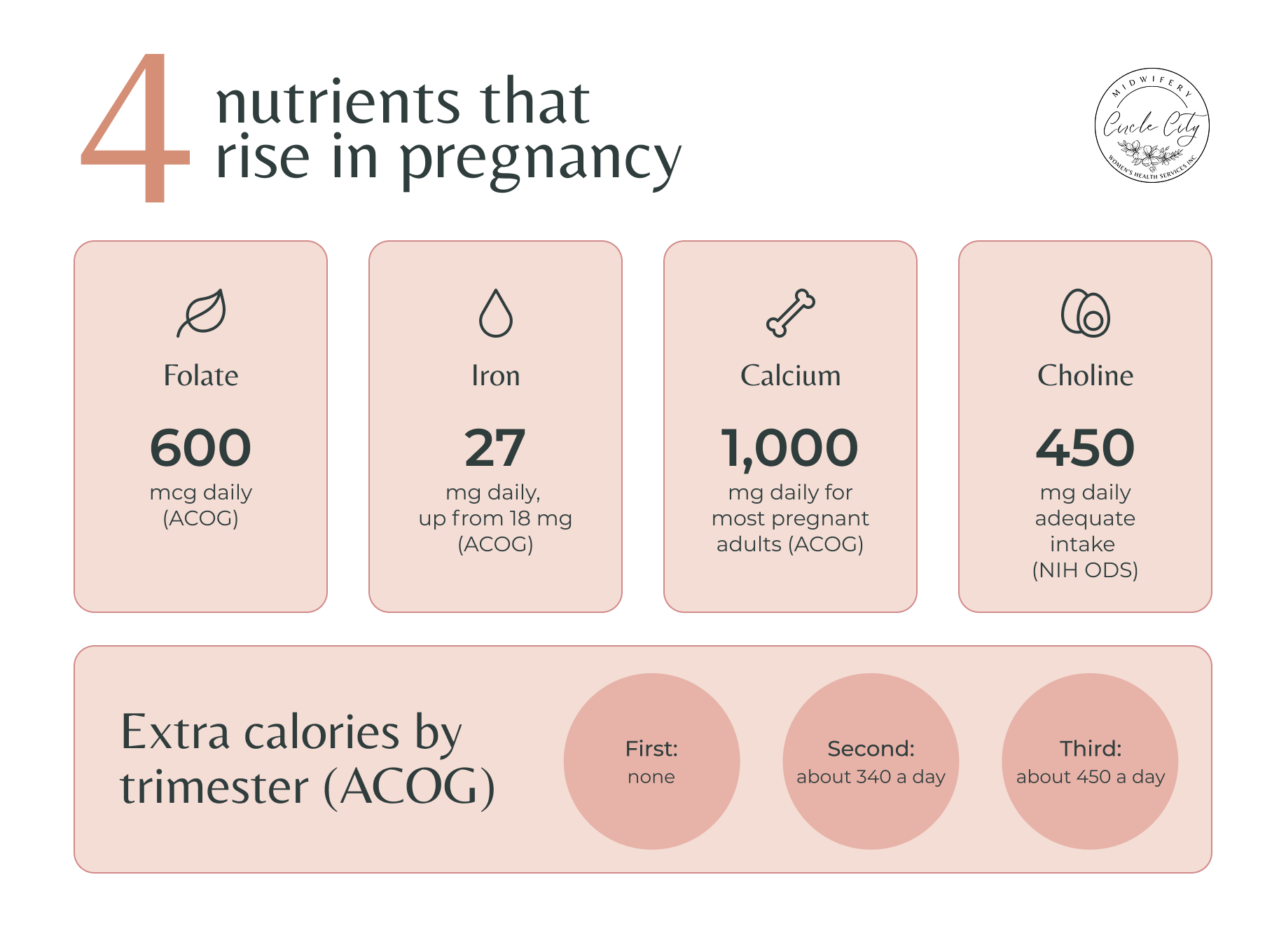
- Four nutrients carry most of the weight: folate, iron, calcium, and choline. ACOG recommends 600 mcg of folate and 27 mg of iron a day during pregnancy.
- The avoid list is real and short: high-mercury fish, unpasteurized dairy, raw or undercooked meat and eggs, unheated deli meat, alcohol, and caffeine over 200 mg a day.
- First trimester needs no extra calories. The increase comes later.
- Many prenatal vitamins contain no choline, so read the label before you buy.
Introduction
What Should You Eat during Pregnancy?
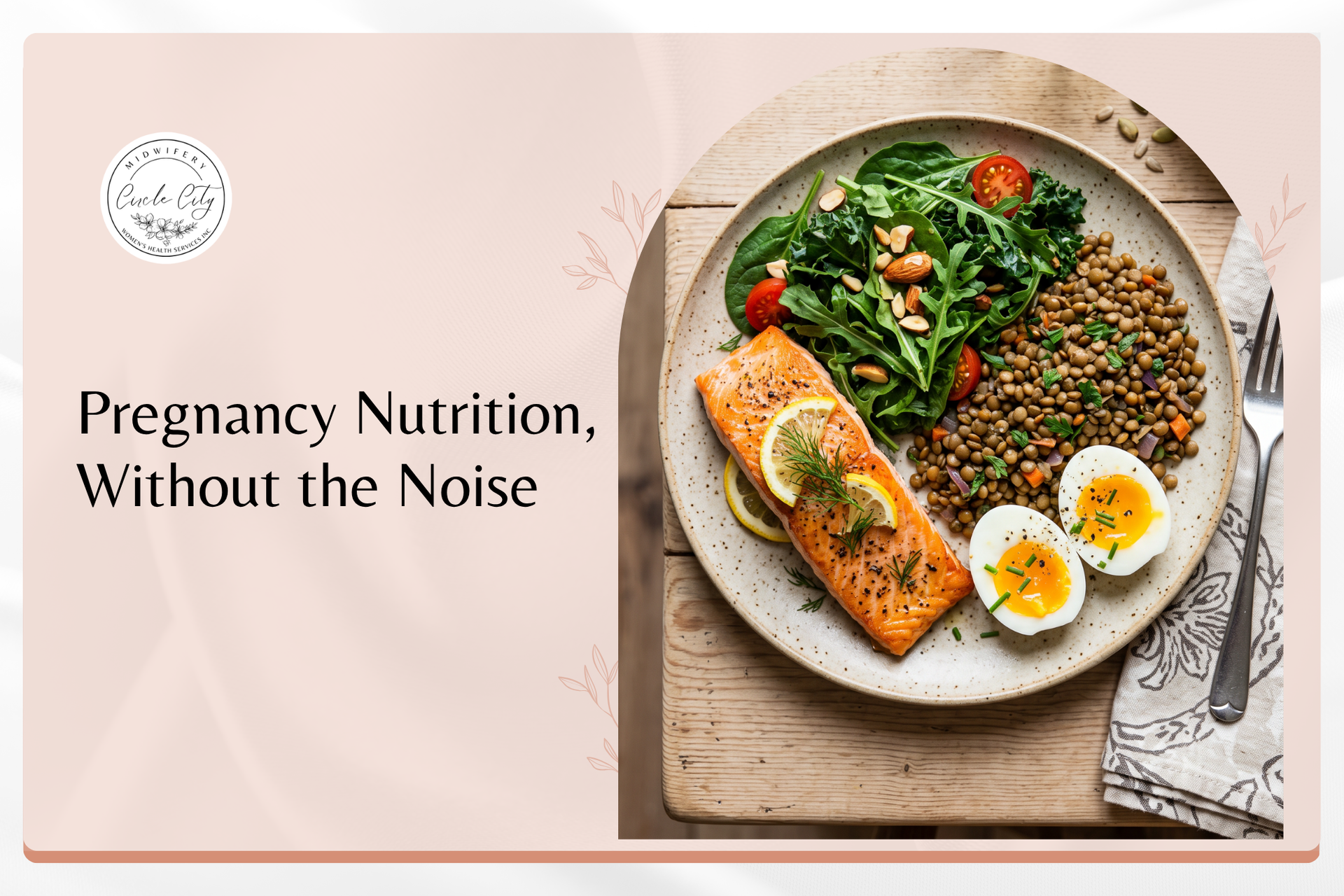
Build meals around protein, vegetables and fruit, whole grains, dairy or a fortified alternative, and low-mercury seafood two or three times a week. Four nutrients need special attention because requirements increase during pregnancy, and food alone doesn't always meet those needs. Those are folate, iron, calcium, and choline.
Folate supports neural tube development in the baby's brain and spine, and ACOG links adequate intake to a lower risk of neural tube defects.
ACOG guidance sets the need at 600 mcg per day during pregnancy, with at least 400 mcg coming from a supplement, as it is difficult to obtain enough from food. Leafy greens, beans, citrus, and fortified cereals carry the rest.
Iron supports the extra blood volume your body builds. The same
ACOG guidance puts pregnancy needs at 27 mg a day, up from 18 mg. Beef, turkey, lentils, beans, shrimp, and fortified cereal are practical sources, and pairing them with something acidic, like citrus or tomato, helps absorption.
Calcium needs sit at 1,000 mg a day for most pregnant adults. Dairy is the obvious route, though fortified soy milk, canned salmon with bones, calcium-set tofu, and kale all count.
Choline is the one almost nobody mentions. The
NIH choline data indicate an adequate intake of 450 mg per day during pregnancy and note that most pregnant people in the United States fall short. Two eggs get you there in good shape. Beef, chicken, fish, and soybeans contribute.
Which Foods Should You Avoid during Pregnancy?
Six categories, and the reasoning behind each is worth knowing because it shows where you have flexibility.
High-mercury fish
The
FDA fish advice names seven to skip: shark, swordfish, king mackerel, marlin, orange roughy, bigeye tuna, and tilefish from the Gulf of Mexico. This is because the mercury in these fish can harm your baby’s developing nervous system.
Everything else is fair game within limits.
Unpasteurized dairy and juice
Soft cheeses like feta, brie, queso fresco, and blue-veined varieties are fine when the label says pasteurized; the CDC's
listeria guidance is clear: check the pasteurization label. Pasteurized milk products and 100% orange juices can be consumed.
Raw or undercooked meat, poultry, eggs, and shellfish
Cook them thoroughly, or else they present the chances of infections from bacteria like toxoplasmosis and Salmonella
Deli meat and hot dogs straight from the package
Heating them to a steaming temperature (165°F) addresses the listeria concern. The CDC notes that pregnant people are 10 times more likely than the general population to develop a listeria infection, which is why this one earns its place.
Refrigerated pâté and meat spreads
Shelf-stable versions are fine.
Caffeine
Above 200 mg per day, roughly two small cups of coffee.
A note on that last one, since it comes up constantly. Two hundred milligrams is a ceiling, not a target, and tea, soda, and chocolate count toward it.
Alcohol of any kind should be strictly avoided. There is no way around that.
What to Eat in the First Trimester When Nothing Sounds Good
Skip ahead if you are past week 14 and eating normally, because this section will not tell you anything new. For everyone still in it: small and frequent bites, three proper meals, and cold food are usually easier than hot food.
What derails people most often is treating the first trimester as a nutritional failure. It is not one. Folate and hydration are what matter in those weeks, and both can be obtained from a diet of crackers and smoothies.
- Keep something starchy by the bed and eat it before sitting up.
- Protein at bedtime, even a spoon of peanut butter, tends to make mornings easier.
- Cold or room-temperature food has less smell, which can help with aversions.
- If a prenatal vitamin is coming back up, taking it at night with food is worth trying.
We also see iron supplements cause constipation around weeks 12 to 16, often just as nausea is easing. It catches people off guard. Fiber, fluids, and a conversation with your midwife about the form of iron you are taking usually settle it.
Do You Need to Eat More While Pregnant?
Less than people expect, and not yet. ACOG guidance says you don't need extra calories in the first trimester, about 340 extra a day in the second, and about 450 in the third. That is a snack and a half, not a second dinner.
What Prenatal Vitamins Cover, and What They Miss
A prenatal vitamin fills gaps; it does not replace food. Most cover folic acid, iron, and usually calcium and vitamin D. The common miss is choline. The NIH notes that fewer than half of prenatal supplements on the US market contain it, and those that do often include only a small amount.
Omega-3 DHA is the second frequent gap. If you are eating low-mercury fish two or three times a week, you are likely covered; if fish is off the table for you, that is a conversation to have with your provider rather than a decision to make in a supplement aisle.
Most people arrive at their first visit with a prenatal already bought, usually chosen on price. That is fine. We just read the label with you.
How Circle City Midwifery Makes General Guidance Personal
General nutrition advice stops being useful the moment your own situation differs from the average, which is most of the time. A previous pregnancy with a neural tube defect changes the folate conversation entirely. Anemia, gestational diabetes, a vegetarian diet, twins, bariatric surgery history, thyroid medication timing: each one moves the numbers.
That is the part of
prenatal care we spend real time on at Circle City Midwifery. Nutrition is a recurring conversation at each visit, not a handout given once at intake. If you are still planning,
preconception care is where folate timing matters most, since the neural tube closes early.
Here is the honest limitation: we do not hand out a printed meal plan, and some people genuinely want one. Our approach is to work with the food you already eat and adjust it, which is slower and less satisfying than a chart on the fridge. For a lighter, list-style read on the same topic, our earlier post on
pregnancy diet do's and don'ts covers the food groups.
Bring your prenatal vitamin bottle to your next appointment and ask what it is missing. It is a two-minute conversation that most people have never had.
If you are pregnant or planning to become pregnant and want that conversation with a midwife, speak to our team in Corona. We will review your current diet, your labs, and what needs to be adjusted for your pregnancy.
Frequently Asked Questions
How much folic acid do I need during pregnancy?
ACOG recommends 600 mcg of folate daily during pregnancy, with at least 400 mcg from a supplement, as food alone rarely provides that amount. Ideally, you start at least one month before conception and continue through the first 12 weeks. People with a prior neural tube defect pregnancy need a much higher amount and should ask their provider.
How much caffeine is safe during pregnancy?
ACOG advises staying under 200 mg a day, roughly two six-ounce cups of coffee. Caffeine crosses the placenta, and your body clears it more slowly as pregnancy progresses. Remember that tea, soda, energy drinks, chocolate, and some medications all add to the daily total, so the coffee count alone understates it.
What fish is safe to eat during pregnancy?
The FDA and EPA recommend 8 to 12 ounces per week, two or three servings, of lower-mercury fish. Salmon, shrimp, tilapia, cod, catfish, sardines, anchovies, and canned light tuna are all on the Best Choices list. Avoid shark, swordfish, king mackerel, marlin, orange roughy, bigeye tuna, and Gulf tilefish.
Can you eat deli meat while pregnant?
Yes, if you heat it until steaming hot, about 165°F. The concern is listeria, which pregnant people contract at ten times the rate of the general population, according to the CDC. Heating kills it. Skip a cold sandwich straight from the deli counter; the same rule applies to hot dogs.
Can I eat soft cheese while pregnant?
Yes, when it is made with pasteurized milk, which most soft cheese sold in US grocery stores is. Check the label on feta, brie, camembert, blue cheese, and queso fresco. Cheese made from unpasteurized milk carries a risk of listeria, and the CDC advises against it during pregnancy.
This article is for educational purposes and is not medical advice. Nutrient needs vary by person. Talk with your midwife or provider about what applies to your pregnancy.