Something feels a little different, though you can't quite name it. Your period hasn't arrived yet, your energy has taken an unexpected dip, and you're not entirely sure what to make of it all. You might be wondering whether what you're feeling is a genuine pregnancy symptom or just an off stretch before your cycle.
That uncertainty is normal. The early signs of pregnancy overlap considerably with premenstrual symptoms, and the timing makes everything harder to interpret. It's easy to second-guess yourself before you have more information.
This guide walks through what the most common symptoms of pregnancy actually look like, when they tend to start, how they shift in the early weeks, and what some lesser-known signs are that don't always come up in conversation. Knowing what to look for can help you feel grounded before your next step.
Ready to Talk to Someone You Can Trust?
What Are the Early Signs of Pregnancy?
The early signs and symptoms of pregnancy aren't always obvious. For many people, the first signal is subtle: a certain heaviness in the breasts, an unusual wave of fatigue in the afternoon, or mild nausea that surfaces before there's any clear explanation for it.
These signals arise from a significant hormonal shift that begins almost immediately after fertilization.
Human chorionic gonadotropin (hCG) starts rising as soon as a fertilized egg implants in the uterine lining, and that hormonal change is largely responsible for what you feel in those earliest days. Progesterone rises too, and together these hormones drive most of what becomes recognizable as the earliest signs and symptoms of pregnancy.
Not everyone experiences the same symptoms, and some people feel very little at first. That doesn't mean something is wrong. The variation is real, and it's wide.
Most Common Pregnancy Symptoms
When people ask ‘what are the symptoms of early pregnancy’, they're usually asking about a handful of changes that show up most often and tend to be among the first things expectant parents notice.
It is still the most recognizable signal for most people. If your cycle is fairly regular and your period is late, that alone is worth paying attention to.
Breast tenderness or fullness:
Hormonal changes cause the breast tissue to become more sensitive, sometimes within days of conception. Many people describe a heaviness or soreness that feels distinct from typical premenstrual changes.
This isn't ordinary tiredness.
Early pregnancy fatigue can feel disproportionate to your activity level, often hitting hard in the first few weeks as your body supports a rapidly developing embryo. Progesterone plays a significant role here.
Nausea (with or without vomiting):
Often called
morning sickness, pregnancy-related nausea doesn't stick to mornings. It can arrive at any time of day and tends to peak between
weeks 6 and 9
for most people. Some may experience no nausea at all.
Blood flow to the kidneys increases early in pregnancy, and the uterus begins placing gentle pressure on the bladder before it's visibly noticeable. Many people find themselves waking up during the night more often than usual.
Food aversions or cravings:
A sudden, strong preference or repulsion towards certain foods is a well-documented early symptom of pregnancy. The smell of coffee, meat, or certain cooked foods can become genuinely overwhelming almost overnight.
Light spotting or cramping:
Implantation bleeding is light spotting that occurs when the embryo attaches to the uterine lining, typically around 10 to 14 days after conception. It's usually very brief and light, and mild cramping can accompany it.
Other Signs and Symptoms of Pregnancy
Shifting hormone levels can noticeably affect your emotional state. Heightened sensitivity, unexpected tearfulness, or sudden irritability without an obvious trigger are all common in early pregnancy.
Elevated basal body temperature:
If you track your basal body temperature, you may notice it stays elevated after ovulation rather than dropping as it normally would before your period. This sustained rise is among the earliest physical indicators.
Metallic taste in the mouth:
A strange metallic taste, sometimes described as tasting coins, is an early symptom that many people don't anticipate. It's caused by hormonal changes affecting taste perception and usually eases as the first trimester progresses.
Heightened sense of smell:
This one often appears before nausea does. Smells that were previously neutral or pleasant can become overwhelming very early in pregnancy, and for many people, it's a direct nausea trigger.
Increased blood volume and hormonal changes can bring on headaches in the early weeks. If you already tend to get headaches, this may be one of your earlier signals.
Pregnancy Symptoms Week by Week
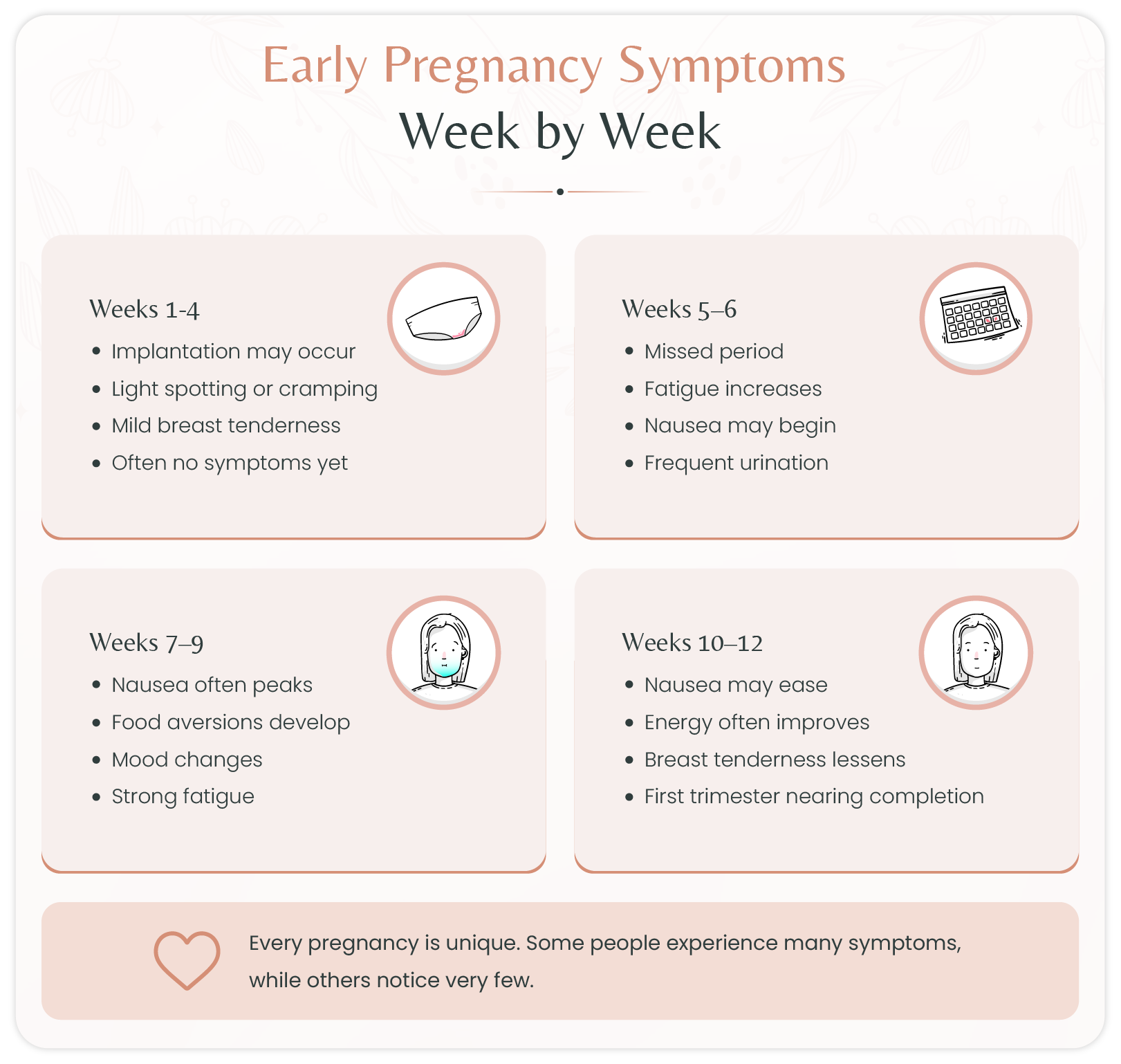
Understanding pregnancy symptoms week by week takes some of the guesswork out of what you're experiencing. While every pregnancy is different, here's a general picture of how things tend to unfold in the first trimester.
Weeks 1 and 2 are counted before conception occurs, based on the first day of your last menstrual period. Fertilization typically happens around week 2. By weeks 3 and 4, the embryo has implanted, and hCG is beginning to rise. You may notice light spotting, mild breast tenderness, or a vague sense that something feels different. Many people feel little to nothing during this window.
This is when early pregnancy symptoms by week tend to become more noticeable. Nausea often makes its first appearance here, fatigue can become significant, and frequent urination typically begins. Your period is now late, and a home pregnancy test taken at this stage should give a clear result.
Nausea and fatigue are often most intense during this stretch. Food aversions can be strong, and appetite shifts and mood changes are frequently more pronounced. This is the window that many people describe as the hardest part of the first trimester.
As the first trimester nears its end, nausea and fatigue often begin to ease gradually. Breast tenderness and heightened sensitivity to smell may also start to decrease, though the timeline varies from person to person.
How Long Does It Take for Pregnancy Symptoms to Show?
This is one of the most common questions people search for, and with good reason. The answer to ‘How long does it take for pregnancy symptoms to show’ depends on your hormone levels and your own sensitivity to hormonal shifts.
For some people, very early symptoms like breast tenderness or fatigue can appear as soon as one to two weeks after conception, sometimes before a missed period. For others, noticeable symptoms of pregnancy don't arrive until week 6 or later. And for a small group, the early weeks are nearly symptom-free.
Early pregnancy symptoms before a missed period do happen, and they're most often tied to implantation or the early rise in hCG. But because these symptoms overlap with premenstrual symptoms, they're easy to dismiss until a period is actually late.
The practical guidance: if you suspect you might be pregnant, a home pregnancy test taken after a missed period, or about 10 to 14 days after unprotected sex, is usually the most reliable first step. If the result is positive, or if your period still doesn't come after a negative result, reaching out to a midwife or healthcare provider is the right next move.
Our blog on
early prenatal care tips covers what to do from the moment you confirm a pregnancy, and it's a helpful read to have on hand.
What to Do Once You Suspect You're Pregnant
Noticing pregnancy symptoms is usually your first signal to pause and pay closer attention. What comes next doesn't need to feel overwhelming. A home pregnancy test is the straightforward starting point. If it comes back positive, connecting with a care provider early makes a real difference in how supported you feel for the rest of your pregnancy.
Early prenatal care lets your midwife monitor key markers from the start, answer the questions you didn't know you had yet, and help you build a plan for your pregnancy and birth that actually reflects what you want. For families who are still in the planning stage, preconception care is also available to help you prepare before you even start trying.
Pregnancy brings a lot of questions. You shouldn't have to sort through them on your own.
Why Circle City Midwifery in Corona, CA?
At Circle City Midwifery, our Certified Nurse Midwives bring both clinical expertise and a genuinely personal approach to every stage of care. Appointments are longer and more thorough than what most people are used to, and you have real time to ask questions and understand what's happening in your body. For families in the Inland Empire looking for an answer to ‘birthing center near me’ that combines that level of attention with a warm, welcoming environment, Circle City has been that place since 2000.
We care for women at every stage: from preconception through early pregnancy, through labor and birth, and into the postpartum weeks. Whether you're newly pregnant, not yet sure, or still planning ahead, we're here to help you feel confident about your next step.
Your Next Step Starts Here
Frequently Asked Questions
What are the signs and symptoms of early pregnancy?
The most common early signs include a missed period, breast tenderness, fatigue, nausea, frequent urination, light spotting, and mood changes. Some people also notice bloating, a heightened sense of smell, a metallic taste, or food aversions before they realize they're pregnant.
When can symptoms of pregnancy start?
Pregnancy symptoms can start as early as one to two weeks after conception for some people. Others don't notice anything significant until week 5 or 6. Timing varies considerably based on individual hormone levels and sensitivity.
Can you have early pregnancy symptoms before a missed period?
Yes. Some people experience breast tenderness, light cramping, implantation spotting, fatigue, or mood changes before their period is technically late. These symptoms are related to the hormonal changes that begin shortly after the embryo implants.
When can you start getting pregnancy symptoms?
The hormonal changes that trigger symptoms begin as soon as the embryo implants, which is usually about 6 to 12 days after fertilization. Whether those changes produce noticeable symptoms that early varies considerably from person to person.