Getting a positive pregnancy test is a life-changing moment that brings a flood of questions: Is this symptom normal? Why is everything smelling so strong? The first trimester of pregnancy is a biologically intense period where your body builds a placenta, produces new hormones, and supports a rapidly developing embryo, all while many changes are invisible. For
first-time parents, this can be overwhelming.
This guide aims to provide clear answers about what to expect during the first trimester, how long it lasts, and what symptoms are typical versus concerning. If you're in the early weeks and feeling uncertain, keep reading for valuable insights.
Personalized Care From Day One
What Is the First Trimester of Pregnancy?
The first trimester of pregnancy runs from conception to the end of week 13 and includes two key stages. The embryonic phase, covering weeks 3 to 8, is when major organ systems such as the heart, brain, and limbs begin to form. By week 9, the baby transitions from an embryo to a fetus, entering a growth phase. Gestational age is surprisingly counted from the first day of your last menstrual period, meaning you may be considered four weeks pregnant before missing a period.
The first trimester also has the highest risk of pregnancy loss, with most
miscarriages occurring before week 12, often due to chromosomal abnormalities. Early midwife support and prenatal care are crucial during this time.
How Long Is the First Trimester of Pregnancy?
The first trimester of pregnancy lasts from weeks 1 to 13, totaling roughly three months. Though 13 weeks is a common standard, some providers may define it as 12 or 14 weeks, depending on their cutoff for the second trimester. A key milestone during this period is the first trimester ultrasound, typically scheduled between weeks 11 and 14.
During this appointment, the care provider confirms the fetal heartbeat, checks on development, and may offer early genetic screenings such as cell-free DNA testing or a nuchal translucency scan.
If you'd like a deeper understanding of these tests and what they can tell you, read our guide on
first-trimester screening and why it's important.
What to Expect in the First Trimester of Pregnancy
What to expect in the first trimester of pregnancy varies from person to person. Some may feel little to no initial symptoms, while others experience significant symptoms early on.
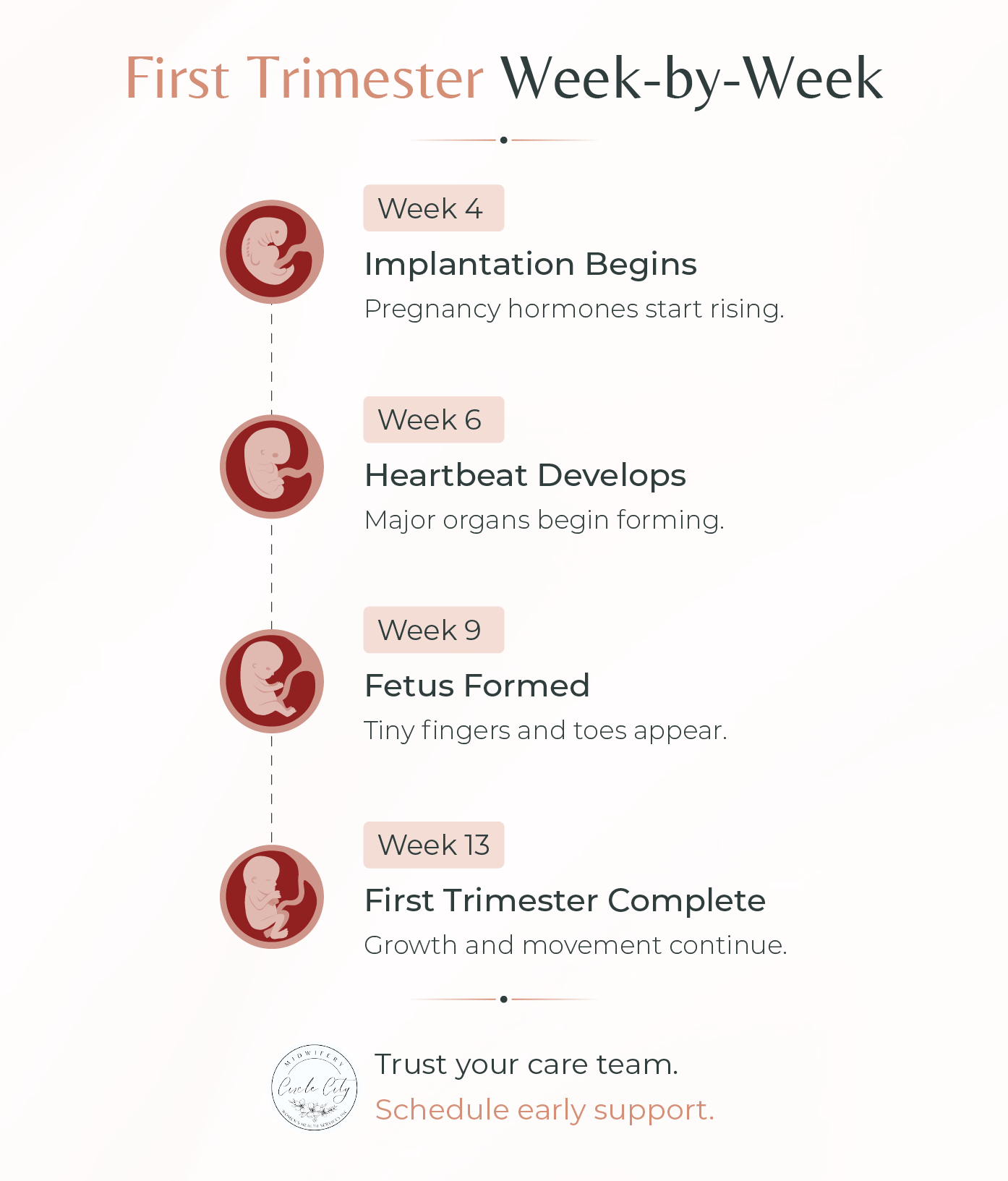
Weeks 1 to 4: Implantation occurs as the fertilized egg embeds in the uterine lining, and the body begins producing the hormone hCG. Many may not feel much during this phase.
Weeks 5 to 8: The heart starts beating, often detectable by ultrasound around week 6. Major organ development accelerates. This is typically when first-trimester pregnancy symptoms like nausea, fatigue, and breast tenderness are most intense.
Weeks 9 to 13: Your baby grows from the size of a grape to a lemon, with fingers and toes forming and facial features becoming defined. The placenta matures and takes over hormone production, which can lead to a decrease in symptoms.
For practical advice on early prenatal care, check our blog on
early prenatal care.
Common First Trimester Pregnancy Symptoms
First-trimester pregnancy symptoms can appear as early as one to two weeks after conception, though many notice them around weeks five or six. Common symptoms include:
- Nausea and vomiting:
Known as morning sickness, it can occur at any time and is caused by rising hCG levels, peaking between weeks 8 and 10 before easing by week 12 or 13.
- Fatigue:
Deep exhaustion is common as the body produces a placenta, increases blood volume, and manages a surge in progesterone. Rest is essential.
- Breast tenderness:
Hormonal changes make breast tissue sensitive, usually easing into the second trimester.
- Frequent urination:
Increased blood filtering by the kidneys and pressure from the growing uterus affect the bladder.
- Food aversions and heightened sense of smell:
Hormonal shifts can make familiar scents unbearable.
- Mild cramping and bloating:
Light cramping is often normal and related to implantation, while bloating is due to slowed digestion from progesterone.
- Mood changes:
Hormonal fluctuations can cause emotional changes.
Not everyone experiences all symptoms, and severity varies.
Signs Your Pregnancy Is Going Well in the First Trimester
In early pregnancy, many people express uncertainty about their situation. This feeling is natural, as it’s hard to know what's happening inside your body when symptoms can vary.
Here are real signs your pregnancy is going well in the first trimester:
- Persistent Early Symptoms: Nausea, fatigue, and breast tenderness indicate your hormones are active. A sudden disappearance of symptoms before week 10 should be discussed with your provider, but it doesn't always mean something is wrong.
- Rising hCG Levels: hCG levels should approximately double every 48 to 72 hours in early pregnancy. Bloodwork can confirm this if there are concerns about the progression.
- Cardiac Activity on Ultrasound: Seeing a heartbeat in an ultrasound between weeks 6 and 8 is a reassuring sign.
- Normal Prenatal Labs: Initial bloodwork checks for blood type, anemia, and immunity to infections. Clean results are positive indicators.
- Easing of Nausea After Week 10: Symptoms often lighten as hCG levels stabilize, which is normal and not a cause for concern.
Consistent prenatal care with a provider familiar with your history is key for reassurance during this time.
Bleeding During Pregnancy In First Trimester: Causes and Concerns
Light spotting that occurs around weeks 3 to 5, when the embryo embeds into the uterine lining. This is typically very light, pinkish or brown in color and lasts only a day or two.
The cervix becomes more vascularized during pregnancy, which means light spotting after sex or a pelvic exam is common and not dangerous.
A small clot near the placenta can cause spotting or heavier bleeding. Most resolve on their own, but your provider will want to monitor it with an ultrasound.
Miscarriage or ectopic pregnancy: Unfortunately, first-trimester bleeding during pregnancy can also be a sign of pregnancy loss or an ectopic pregnancy, particularly when paired with significant cramping, one-sided pelvic pain, or shoulder pain. These situations require immediate medical attention.
Any blood in the first trimester of pregnancy deserves a call to your midwife or care provider. Even if it turns out to be nothing serious, you deserve a clear answer rather than sitting with anxiety.
Tightness in the Stomach During the First Trimester of Pregnancy
Stomach tightness during the first trimester is a symptom that catches many people off guard, especially in early pregnancy, when the uterus is still quite small.
The sensation most often comes from one of these causes:
- Gas and bloating:
Progesterone
slows digestion throughout the first trimester, which causes the intestines to retain more gas. The resulting pressure can create a feeling of tightness or fullness across the abdomen.
- Round ligament stretching:
As the uterus begins to grow, the round ligaments supporting it start to stretch. This can produce pulling or tightening sensations in the lower abdomen, sometimes on just one side.
- Early uterine growth:
Even in weeks six through ten, your uterus is shifting in size and position. Some people notice this as a low, general heaviness or pressure.
- Braxton Hicks contractions:
Less common this early, but they can occasionally occur. They're brief, irregular, and not painful.
When stomach tightness during the first trimester is mild and intermittent, it's generally not a cause for concern. If it's severe, constant, or paired with bleeding, significant cramping, or fever, contact your midwife.
Shortness of Breath in the First Trimester of Pregnancy
Pregnancy and shortness of breath in the first trimester are something many people don't expect. Breathlessness is more commonly associated with later pregnancy, when the uterus presses against the diaphragm. But feeling short of breath in the first trimester is real, and it has a specific explanation.
Progesterone acts directly on the respiratory center in the brain, increasing your breathing rate and depth. At the same time, your blood volume is expanding, placing additional demand on your cardiovascular system. The result is that some people feel mildly breathless, even during routine tasks or light activity.
In most cases, shortness of breath in the first trimester is a normal physiological response and not a sign that anything is wrong.
That said, shortness of breath paired with chest pain, a rapid or irregular heart rate, lightheadedness, or bluish coloring around the lips or fingertips is not something to wait on. Call your care provider right away if any of those additional signs appear.
When to Contact a Midwife or Doctor in Early Pregnancy
Most first-trimester pregnancy symptoms are normal, but some signs warrant a call to your midwife. Reach out if you experience:
- Heavy bleeding with significant cramping
- Severe or one-sided pelvic pain (possible ectopic pregnancy)
- Symptoms of a urinary tract infection (burning, urgency, fever)
- Extreme nausea or vomiting preventing food or fluid intake (hyperemesis gravidarum)
- Sudden disappearance of pregnancy symptoms before week 10
- Fever above 100.4°F
- Any severe or unusual symptom
Don’t hesitate to call; it’s important to get informed answers rather than searching alone late at night. To learn more about midwifery support from early pregnancy to postpartum, check our blog on what a midwife does.
Conclusion
The first trimester of pregnancy is a lot to take in. Your body is changing in ways you can't always see. Your symptoms may be intense one week and gone the next. The questions can feel endless, especially if this is your first time through it.
What makes the difference is having support you can actually trust. Someone who knows your history, answers your questions clearly, and stays with you from the very first prenatal visit through everything that follows.
At Circle City Midwifery in Corona, CA, that's exactly the kind of care we're here to provide. Whether you're in your very first weeks or looking to start prenatal care now, we'd love to be part of your pregnancy journey.
Your Pregnancy Deserves Personal Attention
Frequently Asked Questions
What are the signs and symptoms of early pregnancy?
The most common pregnancy's earliest signs and symptoms include a missed period, fatigue, nausea, breast tenderness, frequent urination, mild cramping, and food aversions or heightened sensitivity to smells. Some people also notice light 2. spotting around the time of implantation. Symptoms vary widely from person to person and from pregnancy to pregnancy, so not experiencing all of these doesn't mean something is wrong.
When can symptoms of pregnancy start?
Technically, as early as one to two weeks after conception, when hCG levels begin rising. But most people don't notice anything significant until around week five or six. It also depends largely on how quickly your hormones ramp up and how sensitive your body is to those changes.
How early will pregnancy symptoms start?
It varies by person and pregnancy. Some notice changes within a week of conception. Others feel nothing until week six or seven. The most intense pregnancy symptoms usually begin between weeks eight and ten, coinciding with peak hCG levels. Neither an early nor a late start is more or less normal.
How does a midwife support a pregnant woman in the first trimester?
This includes ordering and reviewing early prenatal labs, scheduling your first ultrasound, discussing symptoms and their causes, and giving you real answers to questions you'd otherwise Google at midnight. Midwifery appointments are also typically longer than standard OB visits, which means you have time to actually talk through concerns rather than feeling rushed. At Circle City Midwifery, first-trimester care is about building a foundation of trust and informed decision-making from day one.