If the
first trimester felt like survival mode, the second one is where pregnancy starts to feel like something you can actually enjoy. Covering weeks 14 through 27, about 13 weeks in total, this stretch is often called the "honeymoon period" for a reason. The nausea that dominated your first trimester usually eases up. Energy comes back. And somewhere in the middle of it, you'll likely feel your baby move for the first time (quickening).
It's also a busy stretch under the surface, which is exactly what your prenatal visits are for. At
Circle City Midwifery, this is the part of pregnancy our midwives spend the most time walking clients through, since so much changes at once. Here's what's actually going on, for you and for your baby.
What's Changing in Your Body
Your uterus is expanding to make room, and the ligaments holding it in place are stretching along with it, which is why some new aches show up in your abdomen, hips, or lower back. The skin over your belly and breasts stretches too, and that's usually what's behind any itching you notice.
You might also see darker patches on your skin, or a faint line running down from your belly button. That's the linea nigra, caused by a rise in melanin, and it almost always fades after the baby arrives.
A few other things are worth knowing how to read. Clear or white vaginal discharge is normal. If it smells off, changes color, or is accompanied by pain or itching, that's your cue to
call your midwife rather than wait it out.
The same goes for swelling: mild puffiness in your ankles or fingers is common as your body holds onto more fluid, but sudden or severe swelling, especially in your hands or face, can signal
preeclampsia and needs attention right away.
On the more manageable end: leg cramps tend to strike at night, and stretching before bed along with staying active during the day usually helps. And if your appetite has picked up, that's completely normal. Lean into it, just aim for meals that are actually feeding you and the baby well.
Your Mind Is Adjusting Too
Physically, most mothers feel better in the second trimester. Mentally, it's a mixed bag. The exhaustion lifts, but so does some of the distraction that came with it, which means worries about the baby, about parenting, about everything ahead, can get louder. That's a normal part of this stage, not a sign that anything is wrong.
What helps is doing the things that make the unknown feel smaller: learning about what's ahead, starting to prepare for the baby's arrival, and talking through what you're feeling instead of sitting with it alone. And if what you're feeling starts to look like real
depression or anxiety, not just nerves, that's worth raising with your midwife directly. It's common, it's treatable, and you don't have to push through it quietly.
What's Happening for Your Baby
While your body handles all of that, your baby is going through a growth sprint of their own. Bones start to harden. The nervous system develops. Skin thickens, lungs begin to form, and the digestive system begins to function. By the end of the second trimester, your baby can hear your voice, which is a strange and wonderful thing to sit with.
In terms of size: according to the American College of Obstetricians and Gynecologists, your baby is about
3 to 4 inches long and weighs around 1.5 ounces at the start of the second trimester. By the end of it, that's grown to roughly 14 inches and 1.5 to 2.5 pounds. Your regular ultrasounds during this stretch are when you'll actually see that growth.
What Tests to Expect
Beyond the standard ultrasound, which checks your baby's sex and anatomy, your provider may recommend a few additional tests during this trimester:
- A gestational diabetes test
- An Rh factor test, to confirm your blood type is compatible with your baby's
- A complete blood count, to check for anemia
- A syphilis test, if relevant to your history
Your midwife may suggest others based on your specific history. Take them. They know your case better than any general guide can.
Signs That Need Urgent Attention
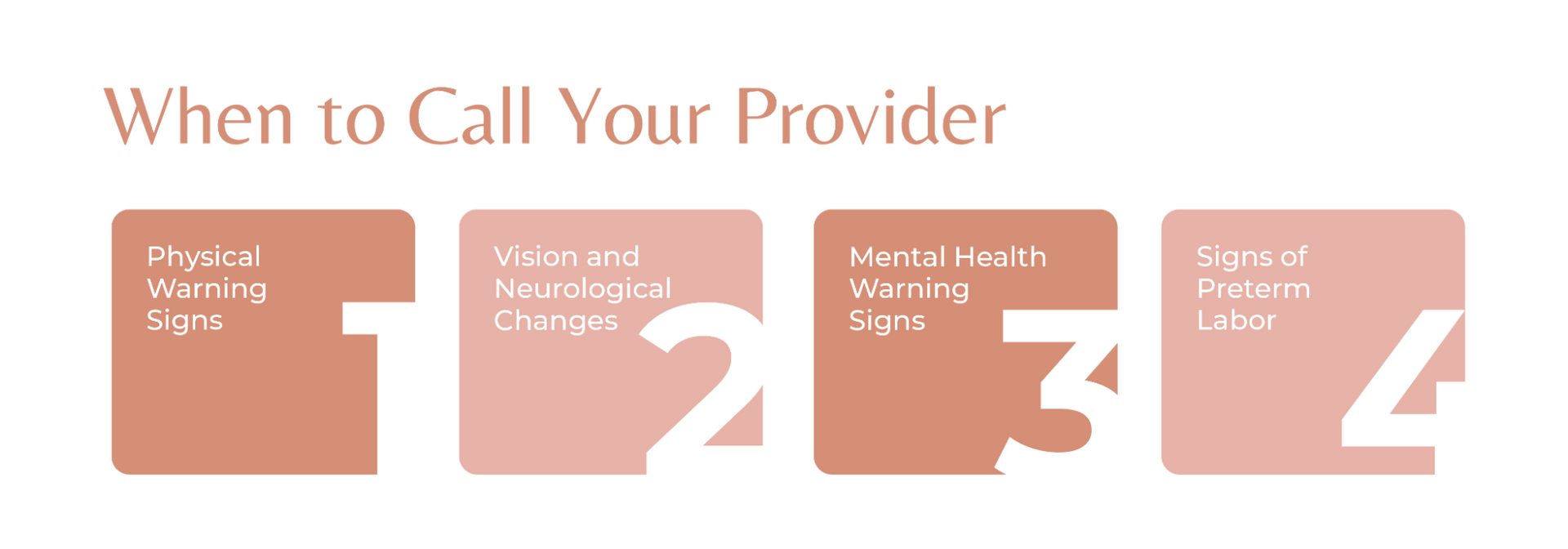
Most of the second trimester is genuinely the easier stretch, but a few symptoms mean you should get care right away rather than wait it out:
That one about intrusive thoughts deserves its own mention: if you're experiencing thoughts about harming yourself or your baby, that's more common than most people realize, and it's treatable with proper
prenatal care. Contact your midwife immediately or reach out to a crisis line. You're not the only one this has happened to, and you don't have to handle it alone.
Make the Most of the Calm
This trimester won't last, so it's worth using it. A few things worth doing before it ends:
- Plan a babymoon.
A trip with your partner to reconnect before the baby arrives, cleared with your doctor first.
- Start the pediatrician search.
Ask friends and family for recommendations now, before the third trimester crunch.
- Map out your leave.
If you're heading back to work, look into childcare early.
- Get a massage.
Foot, head, or full-body, all fair game. Just skip the saunas and hot tubs.
- Learn what
postpartum midwifery support looks like.
It helps to know what's waiting on the other side of delivery.
- Play with baby names.
It's one of the few parts of this that's just fun.
What This Means for You
The second trimester is the version of pregnancy most people picture when they imagine feeling good while pregnant: more energy, fewer surprises, and a baby that's finally starting to feel real. Knowing what's normal and what's worth a call to your provider is most of what makes that possible.
If anything above raises a question specific to you, schedule an appointment with Circle City Midwifery and bring it with you.
Frequently Asked Questions
What position should I sleep in?
Sleeping on your left side is generally recommended, since it improves blood circulation for both you and your baby.
Is there anything I should avoid during the second trimester?
Alcohol, tobacco, and recreational drugs are all off the table. Raw or undercooked food and unpasteurized milk carry a risk of foodborne illness, and saunas, hot tubs, and anything else involving heavy heat exposure should be avoided until after delivery.
Should I be eating for two now?
No. Eat according to your appetite, and make sure what you're eating is genuinely balanced, not doubled.